Container shipping is about containers and ships. To accept and process bookings, the company needs to transport around 15 million shipments per year with a container fleet of 3,5 million containers, averaging 3 to 5 turns per container. Supplying containers returned from import to the next export shipment is one of the foundation processes that enable our business. This process is exceptionally complex, with multiple dependencies and constraints constantly changing in time:
- Network and contingencies
- Capacity and move count
- Volume fluctuation - forecast precision
- KPI misalignment and lack of coordination between:
- Commercial and Operational functions
- Different Clusters and LOCs, Inland and Ocean, EQU, Network Design, Uptake, Capacity etc.
At the same time, equipment supply flow is one of the major costs in our business, with enormous complexity of flow management. For example, every moment in time we have to connect around 70.000 import returns with 70.000 export pick-ups. This means that we have almost 5 billion potential options on how to re-supply equipment. Currently the equipment supply flow is based on manual, fragmented and biases driven planning. This results in several challenges:
- Exceeding stock targets in surplus LOCs, while at the same time having lack of equipment in deficit LOCs, forcing to in-fleet new containers – waste of money!
- Reactive execution, many last minute changes, additional transshipments and extra-loaders
- Costly sub-optimal positioning options used for equipment re-positioning
- Low asset utilization and not optimal infleet planning
- Missed bookings and unhappy customers
To be competitive we need to reduce operational costs and improve customers’ satisfaction.
How Will DDFO Address The Challenges?
To successfully provide services to our customers at a lowest cost, we need to digitize and align commercial and operational planning.
The purpose of supply flow optimisation is to produce the most optimal x-functional plans to connect forecasted volumes in space and time and in the most cost-efficient way. This includes connecting the flow to comply with the long-term supply and fleet planning to daily automatic generation of supply orders, constantly adjusted to current network, capacity and volume changes.
Expected Benefits of ROCK & DDFO
In 2015, the project ROCK/DDFO was initiated to modernize the existing Equipment Planning system (RegionBox) and introduce optimisation technology to further improve the equipment planning capabilities of the company. The expected benefits of the product includes:
- On the fly data driven decision modeling for CEN, LOCs & CCs
- Hard benefits
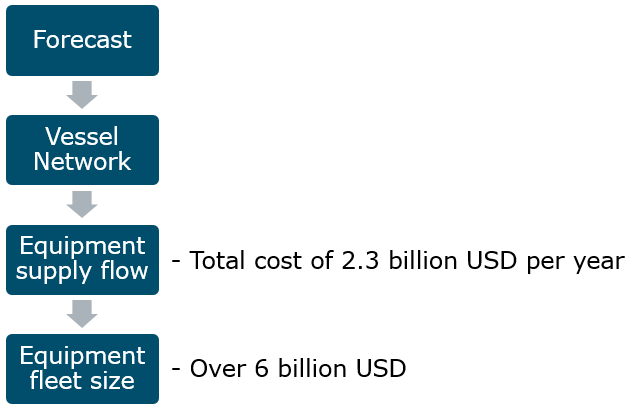
- Estimated to reduce 2% or more of total positioning costs of 2.3 bn USD.
- Estimated to reduce 2% or more of total EQU fleet size of over 6 bn USD.
- Soft benefits
- One set of data aligned with other functions in real time
- Improved booking acceptance
- Effectiveness of supply planning and execution through digitalization will differentiate us from the competition.

